
What is a Distributed Control Architecture?
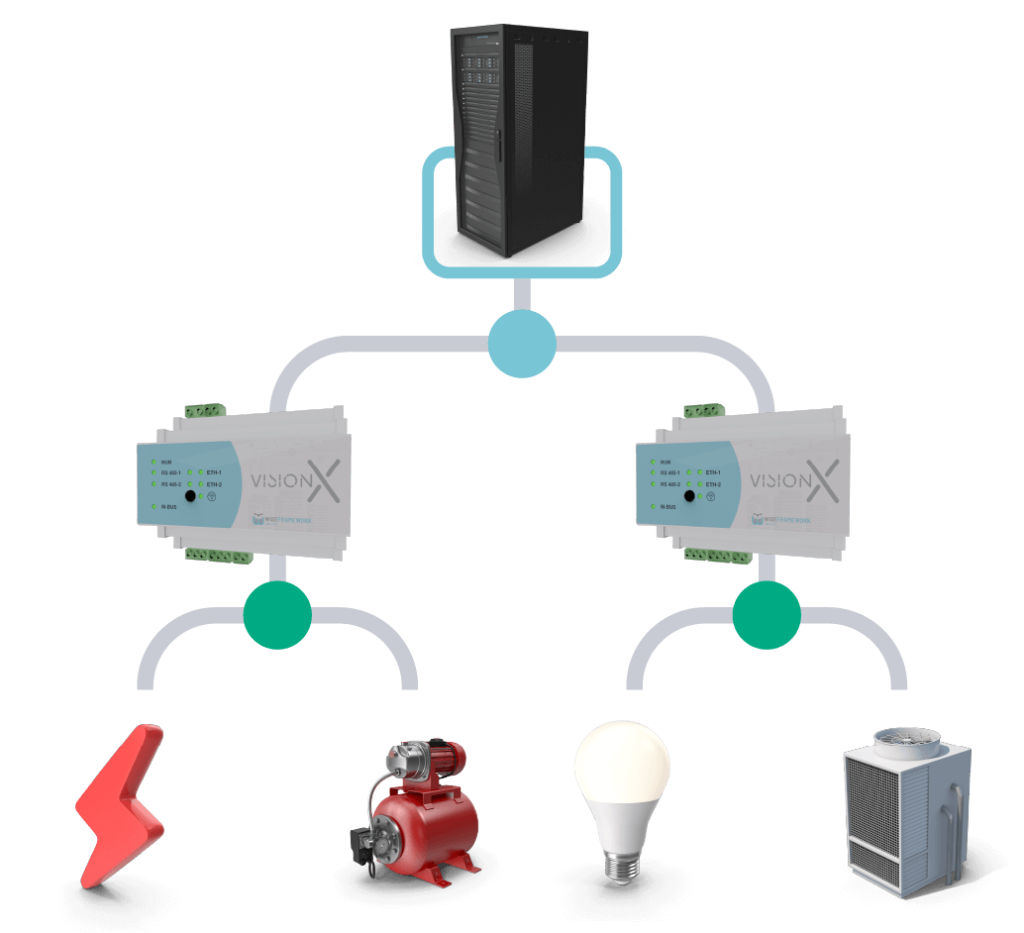
A distributed control system (DCS) is a model in which the task of controlling systems is distributed across several local controllers rather than concentrated in a single central controller. Each local controller is responsible for a specific part of the building or a particular subsystem (e.g. the air conditioning system on a floor or the lighting in a wing). These controllers communicate with each other and with a central management platform, coordinating to ensure that the building functions harmoniously.
Unlike a centralised architecture, where all decisions pass through a single “control room”, in distributed control each controller makes autonomous decisions in its area and shares relevant information with other systems.
Benefits for Smart Buildings
Distributed architecture brings several practical and strategic benefits to smart buildings:
- Greater Resilience and Reliability: Without a single point of failure, the system becomes more robust. If one controller fails, the others continue to operate autonomously, preventing the entire building from being affected.
- Scalability and Flexibility: It is easier to expand or modify the system. New equipment or sensors can be easily added to the network without redesigning the entire architecture. Thus, the building can evolve over time at lower costs.
- Performance e Resposta Rápida: Decisões locais significam tempos de resposta mais rápidos. Por exemplo, um sensor de presença pode comunicar diretamente com o controlador de climatização local para ajustar a temperatura de imediato, sem aguardar instruções de um servidor central. Essa reação pronta melhora o conforto e poupa energia.
- Interoperability and Integration: Distributed architectures use open protocols (BACnet, KNX, Modbus, etc.) so that devices from different manufacturers can communicate with each other. This allows air conditioning, lighting, security and other systems to be integrated transparently into a single platform.

Practical Application: How It Works in Reality
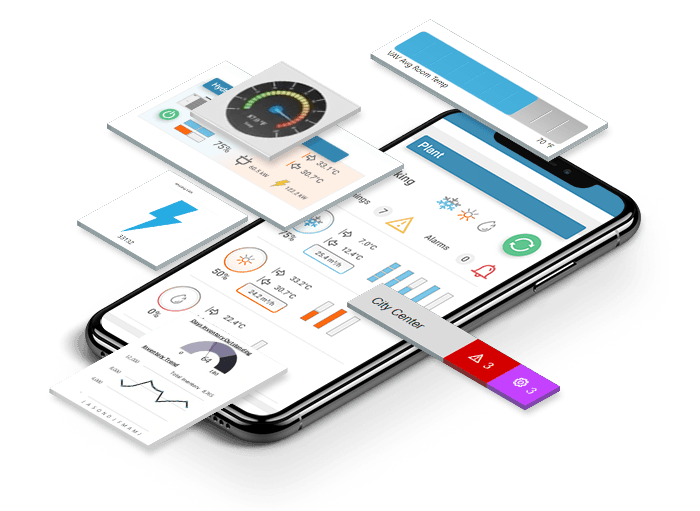
In practice, this architecture is organised in layers. At local levels, sensors and actuators distributed throughout the building connect to controllers that directly manage the equipment in their area (for example, controlling the air conditioning on a floor according to the measured temperature). At a higher level, a central management platform collects data from all distributed controllers and allows for global monitoring and general adjustments. All these elements communicate in a network using open protocols (such as BACnet, KNX, Modbus, etc.), ensuring that devices from different manufacturers operate together. Thus, a fire alert detected by the security system can be immediately transmitted to the air conditioning and lift controllers, which automatically perform the necessary emergency actions – all without human intervention.
How WiseBuilding Integrates Distributed Control Architecture
WiseBuilding, a specialist in building management systems, adopts this philosophy of distributed control in the solutions it develops. From the design stage onwards, the system prioritises the distribution of intelligence across the various controllers and a unified central platform for monitoring and command.
A practical example is the New Sintra Hospital, where WiseBuilding implemented an advanced SGTC with more than 20,000 control points integrated via open protocols (KNX, Modbus, M-Bus, BACnet), ensuring flexibility and reliability in a critical hospital infrastructure, or at GALP’s headquarters at ALLO – Alcântara Lisbon Offices – Lisbon.
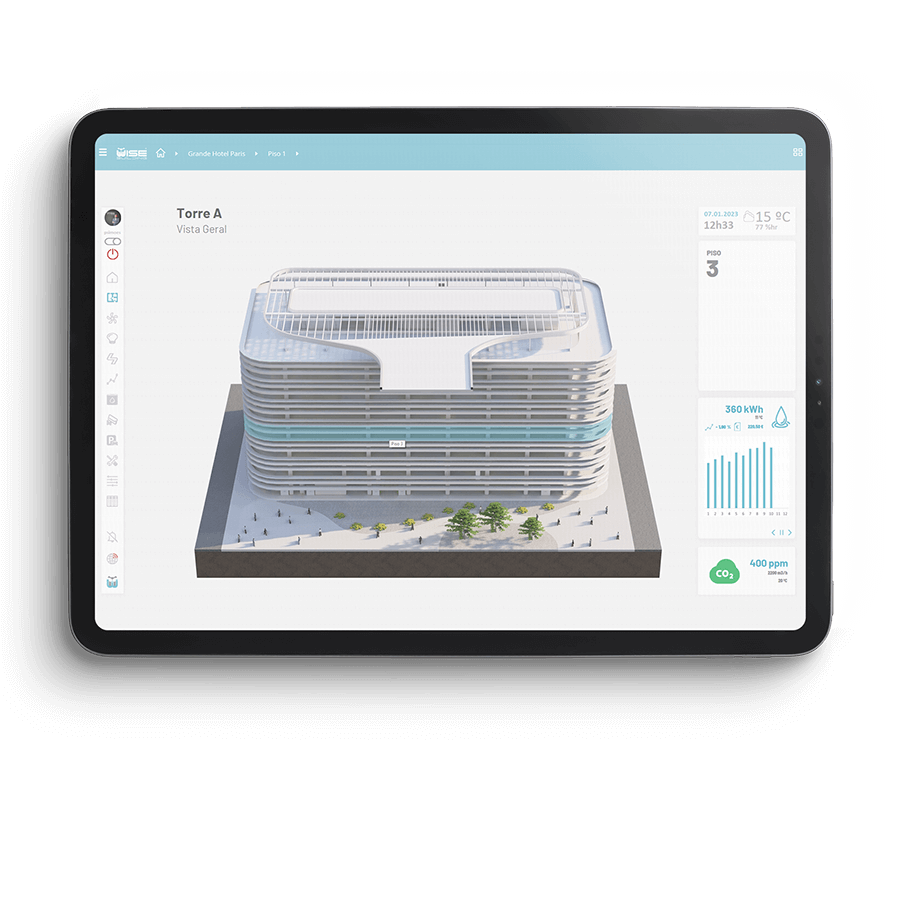
WiseFramework, WiseBuilding’s platform, is based on a distributed, cloud-ready architecture, ensuring the flexibility to expand control from a single building to multiple facilities in a single interface. In addition, the Wise2Cloud tool ensures secure, real-time remote access, allowing you to monitor and adjust systems from anywhere.

Conclusion
By distributing ‘intelligence’ across multiple controllers, the building becomes capable of responding quickly to user needs and changes in the environment, while maintaining effective central management. It is, in essence, giving buildings the ability to think globally and act locally – an ideal recipe for sustainability and optimised performance.
WiseBuilding® is technically capable of implementing any differentiated project that creates buildings that think, save and protect the planet. Consult us.
WISEFRAMEWORK is a BACnet B-AWS certified software solution for state-of-the-art integration, control, management and visualisation in building automation systems. Designed to redefine the way buildings are operated through an open platform and seamless harmonisation between building-generated data by supporting multiple protocols including BACnet, Modbus, KNX, OPC-UA and MQTT. Through the use of Haystack technology, the software also empowers the building for the future at the forefront in the integration of the various technical systems.