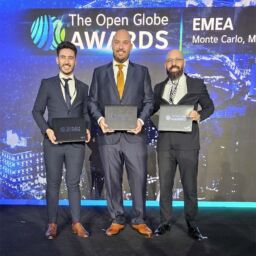

WiseBuilding® and Johnson Controls discussed the future in the present of smart buildings
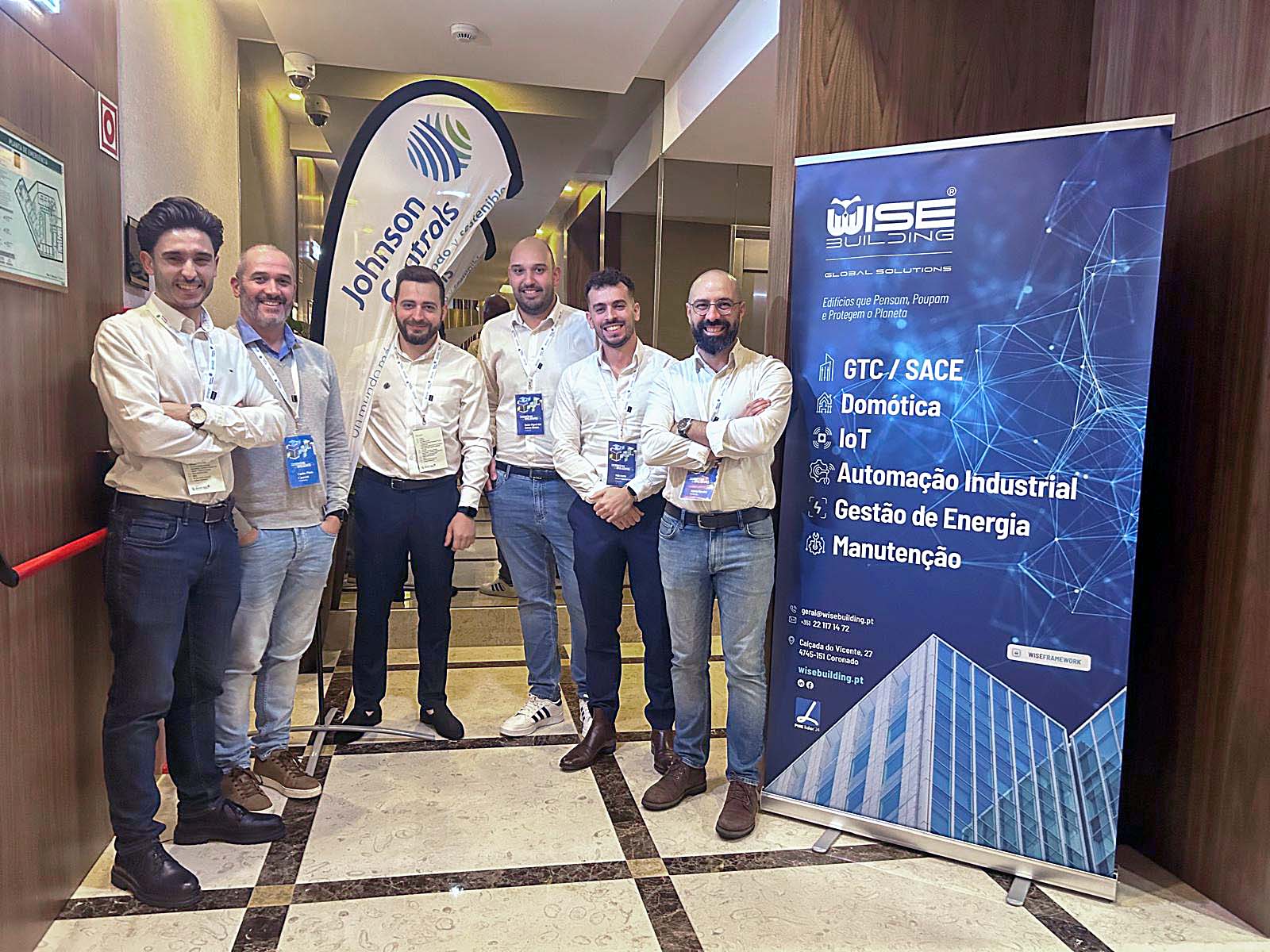
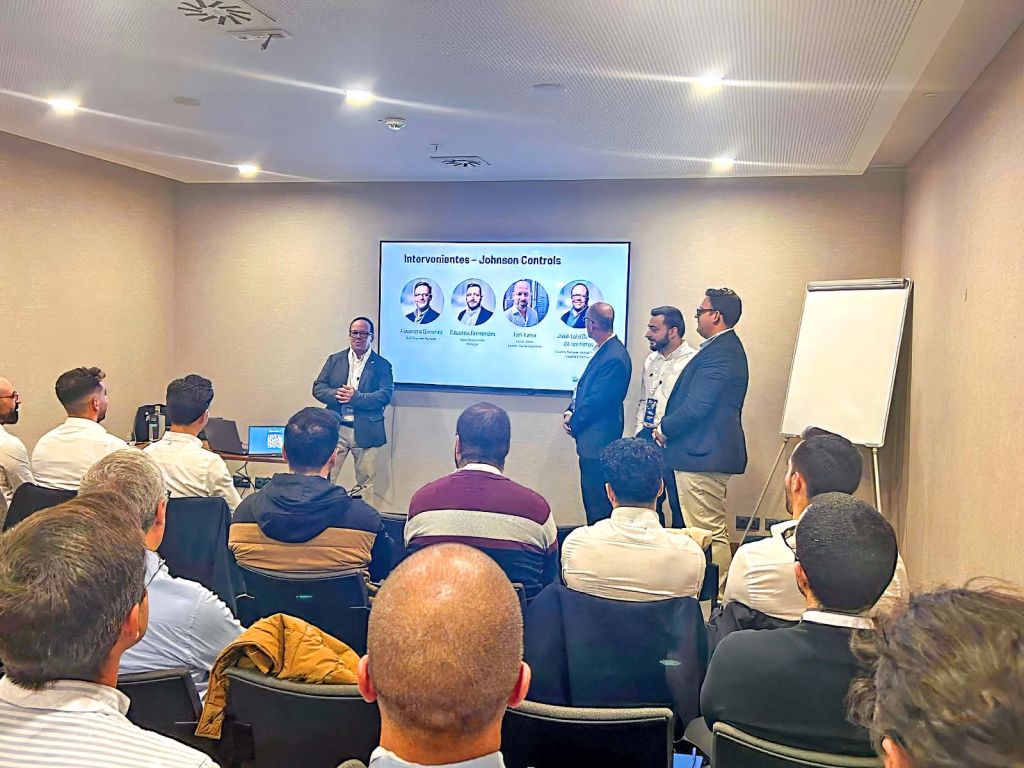
On November 12, 2025, WiseBuilding® held its first WiseMeetings event in partnership with Johnson Controls, under the title “The new era of SMART BUILDINGS – From history to innovation.” It was an event designed for those who live inside buildings: energy managers, maintenance managers, consultants, design engineers, and decision-makers who have already realized that automation is no longer a luxury but a strategic requirement. Since our first participation in this event, we at WiseBuilding® have advocated and believed that the next decade will be marked by Buildings that Think, Save, and Protect the Planet, and that this vision is only achievable when technology, legislation, and operation sit at the same table.
From regulatory context to platforms: why this workshop took place now
Firstly, and to kick off our event, we addressed the evolution of building automation in light of the new wave of European regulations. The most recent update to the EPBD, the European directive on the energy performance of buildings, reinforces decarbonization targets, continuous monitoring requirements, and the central role of automation systems. In practical terms, this means that commercial and service buildings will no longer be assessed solely on the basis of their energy label, but will also be scrutinized for their ability to be “smart,” i.e., to collect data, react in real time, integrate renewable production, and support investment decisions. It is in this context that it makes sense to talk about platforms and not just isolated systems. For this reason, we have structured this event around two complementary pieces: WiseFramework, developed by WiseBuilding®, and OpenBlue, from Johnson Controls, presenting how each solves very specific problems and how, together, they respond to the combined pressure of daily operation, as well as upcoming legislation.
WiseFramework: the ground layer for buildings that think and save
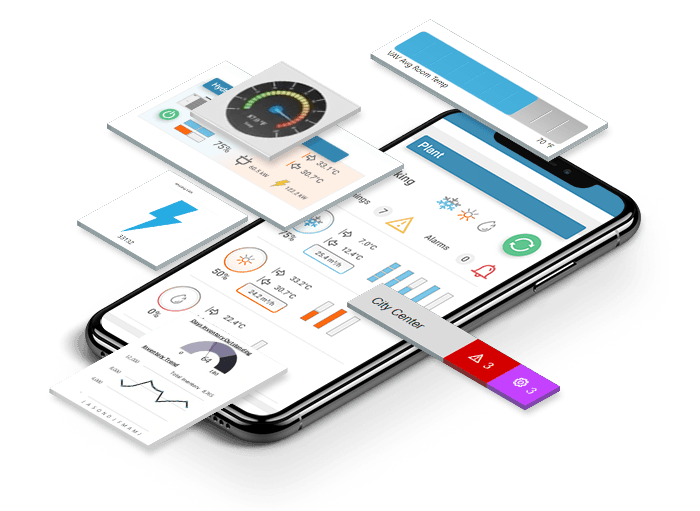
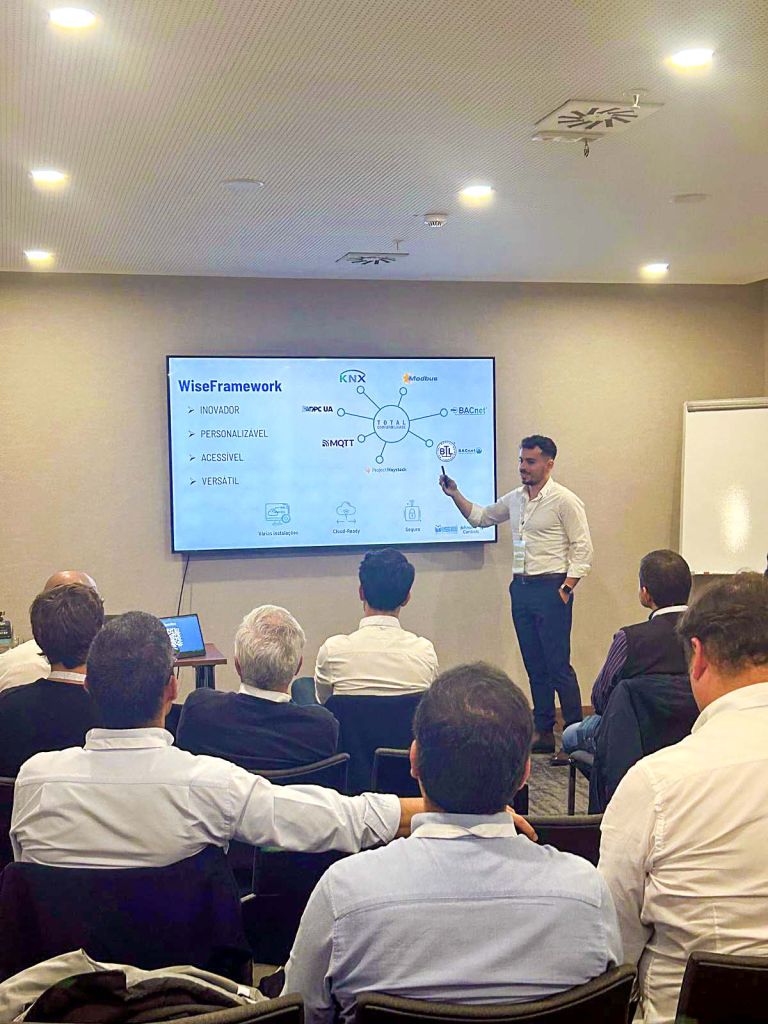
In the session dedicated to the new WiseFramework, we presented why this new platform is more than “just” a modern BMS. The reality that many participants recognized is simple: buildings with HVAC systems from several generations, partially digital lighting, autonomous shading, photovoltaic production in one corner, scattered meters, and Excel spreadsheets trying to piece together the energy puzzle. The WiseFramework platform was created precisely to orchestrate this chaos, as it integrates HVAC, renewables, energy management, remote management, lighting, and shading into a single platform, using open protocols such as BACnet, Modbus, KNX, or MQTT, and an approach designed for SACE and EPBD.
During the event, we detailed how WiseFramework normalizes data, creates consistent point models, and provides dashboards that serve both maintenance technicians and portfolio managers. It is not about having “more graphs,” but about being able to answer very specific questions: where is energy being wasted, which equipment is systematically out of order, how do loads react to outdoor conditions, and what are the priority measures to reduce consumption and emissions. At the same time, we insist on the idea that the platform was designed to be repeatable: what is learned in a hospital can be reused on a university campus or in a group of municipal buildings, without reinventing the wheel in each project. This is where our motto takes on substance: if the building “thinks” better because it reads, relates, and understands its data, it inevitably ends up ‘saving’ more and “protecting” resources better.
OpenBlue: portfolio insight, cloud intelligence, and net-zero ambition
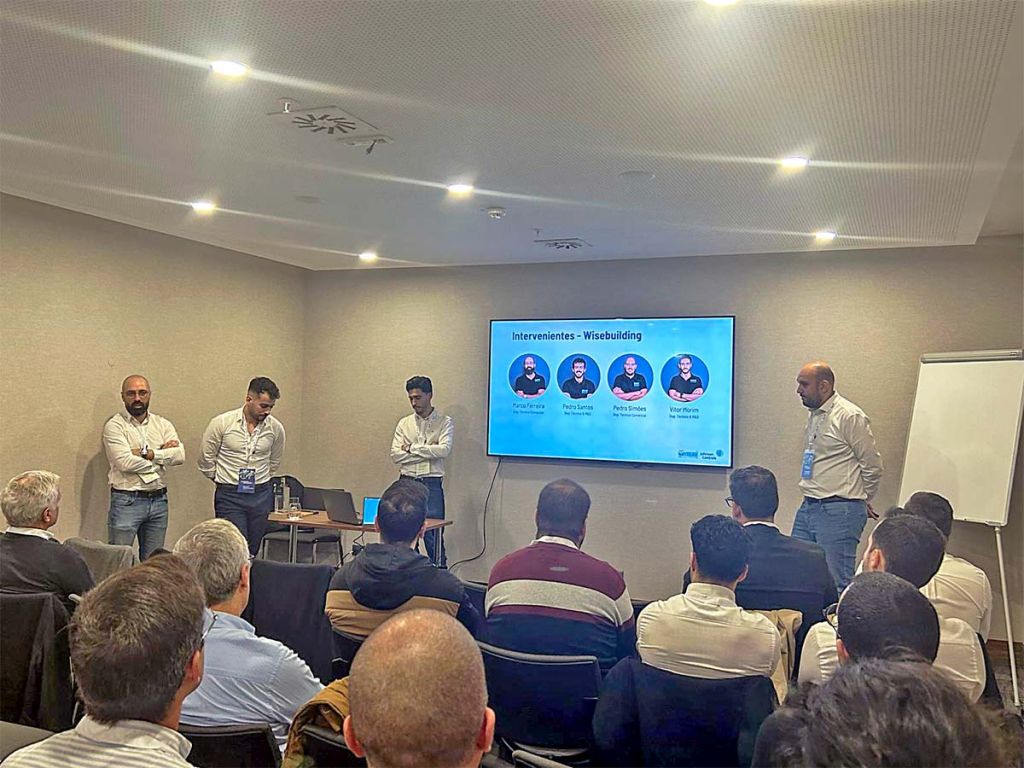
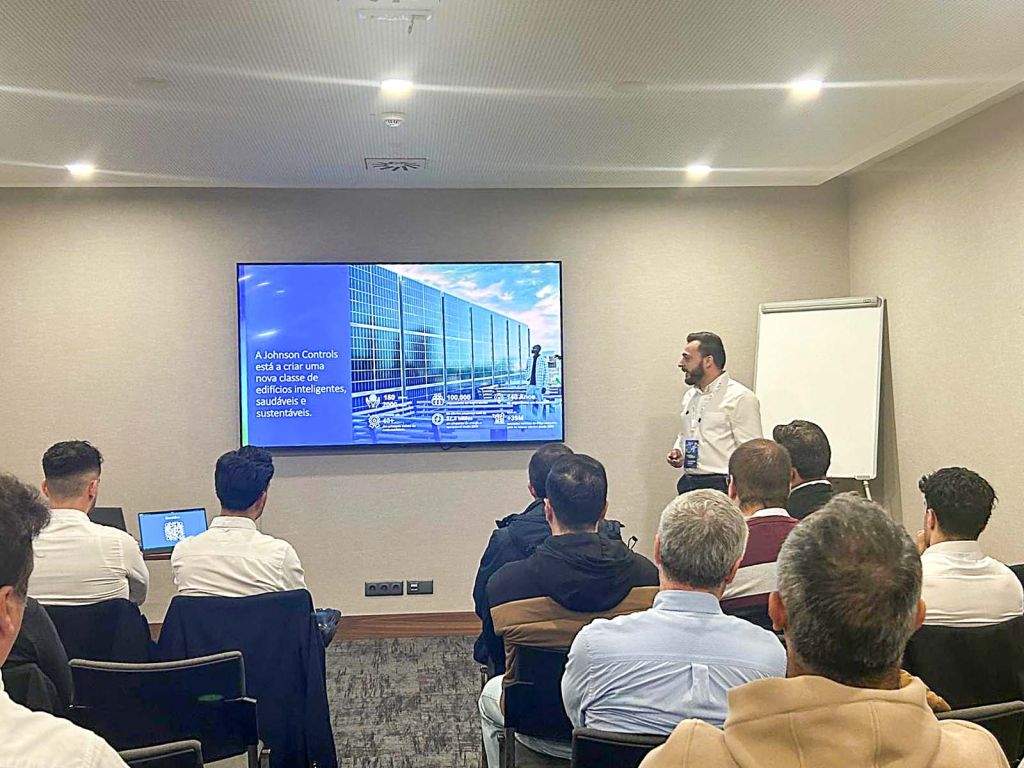
Next, together with our partner Johnson Controls, the focus shifted from field details to the big picture. OpenBlue was presented as a digital platform for portfolio management, with cloud services and artificial intelligence modules geared toward energy, emissions, comfort, and space utilization. While WiseFramework is closer to controllers, sensors, and field integrations, OpenBlue looks at the building, or more often, at multiple buildings with a strategic lens to compare performance, design scenarios, simulate decarbonization trajectories, and track net zero goals.
We explored with our participants what it means to have a layer of advanced analytics capable of predicting consumption, identifying anomalous patterns, suggesting optimization measures, and monitoring over time whether these measures are actually delivering results. Johnson Controls presented international examples where the combination of robust automation with OpenBlue has enabled significant reductions in consumption and emissions, as well as measurable operational improvements, such as shorter response times to failures, fewer corrective maintenance interventions, and improved user comfort. For those who manage a portfolio of office buildings, hospitals, hotels, or industrial facilities, the message was clear: intelligence is no longer just “inside the building” but moves to a layer that sees the system as a whole, with internal and external benchmarks.
Buildings that Think, Save and Protect the Planet
Two levels, one common vision: interoperability, legislation, and opportunity
In this context, the point of convergence became clear to many of the participants: WiseFramework and OpenBlue do not compete with each other but rather complement each other. We at WiseBuilding® position ourselves as the integrator that builds the solid, interoperable foundation, oriented towards SACE, EPBD, and daily operation, which, in partnership with Johnson Controls, connects this foundation to a global platform capable of scaling to dozens or hundreds of buildings. At a time when the new EPBD reinforces measurement, control, and reporting requirements, this combination of field and cloud is not just an elegant technological option, it is a pragmatic way to be prepared for what comes next.

Contacts, partnerships, and next chapters of the “new era”
If there is one thing that WiseMeetings events aim to achieve, it is that the sharing of knowledge and topics does not end when the projector is turned off. The event that took place on November 12 was a clear example of how we achieved our goal, as it ensured contact and engagement between different areas: manufacturers, integrators, consultants, operational teams, and decision-makers who rarely have time to sit down and discuss the building in an integrated way. We ended this event with new contacts, ideas for collaboration, and, above all, with the feeling that the Portuguese market is ready to make the leap from classic GTC to a platform and partnership approach, as we have done with our long-standing partner, Johnson Controls, to whom we are deeply grateful for co-organizing this event with us.
Na WiseBuilding®, encaramos este evento como o início de um ciclo: nesta “nova era dos edifícios inteligentes”, não basta ter hardware avançado ou dashboards apelativos. É necessário alinhar soluções como a WiseFramework e o OpenBlue com a nova legislação europeia, com modelos de exploração mais exigentes e com uma ambição clara de descarbonização. O futuro que destacámos no nome do evento já não é um exercício de ficção tecnológica, pois está a entrar tanto pelas salas técnicas como pelas salas de reunião. E a grande questão, para quem gere edifícios hoje, é simples: prefere assistir de fora ou fazer parte ativa desta transição?
WiseBuilding® has the technical expertise to implement any project that creates buildings that think, save, and protect the planet. Contact us for more information.
WISEFRAMEWORK is a BACnet B-AWS certified software solution for state-of-the-art integration, control, management and visualisation in building automation systems. Designed to redefine the way buildings are operated through an open platform and seamless harmonisation between building-generated data by supporting multiple protocols including BACnet, Modbus, KNX, OPC-UA and MQTT. Through the use of Haystack technology, the software also empowers the building for the future at the forefront in the integration of the various technical systems.